1800 424 065




















70 years of Council for Intellectual Disability
We celebrated our 70th anniversary in 2026. Hear about our history from the people who made it!
Transcript
CID staff members: 2026 is the 70th anniversary of the Council for Intellectual Disability.
We are a disability rights organisation led by people with intellectual disability.
At CID today, we advocate, we educate, we listen, we support, we speak up, and we make change.
But now… Let us take a few moments to meet some of the change makers who helped make CID what it is today.
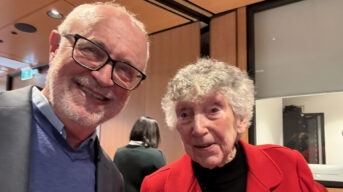
Jeanette: Jeanette Moss, third child Neville, had a cyst on the brain and it caused an intellectual disability because of the damage to the brain and wondered what to do for Nev to help him in later life. I went to an open day at a nearby hospital, Rydalmere Hospital. I was so appalled with what I saw there, and that started my advocacy journey. Before I knew it, I was the Director of Council in 1980-81.
In the first year I was Chair, in 1982, we talked about how we wanted what people with intellectual disability wanted themselves to be our main core issue of making change.
We did have the audacity to write an article in the magazine we produced at that time saying that the government wasn’t being truthful, you know, virtually no money for people with intellectual disability and yet this much money for yourselves. And we got a swift invitation to come and meet with the Premier.
We decided we wouldn’t argue. We’d ask him to explain what he had done. And Neville Wran was a bit nonplussed, I think. Quickly asked for his disability person to come. She came and said that everything we’d written was true.
Jim: My name is Jim Simpson. I’ve been involved with CID in a number of different ways from the early 1980s.
I first got involved when I was a young lawyer doing volunteer work at Redfern Legal Centre. I was sitting quietly in my mid-city legal office and Jeanette Moss came on the phone and she said, Jim. we need you to represent us on this committee that’s going to develop new guardianship laws for New South Wales. I immediately realised there was no point arguing, that I’d just be wasting time, and so it was better to say yes straight away.
Jeanette: Members of Parliament couldn’t miss us. I’ve still got a copy of a letter from a departmental person saying this woman, she came up and she wanted to speak to the minister. What will we do with her? I’ll never forget the minister saying, give her what she wants. Get her out of my hair sort of thing. As we learnt more, we could advocate more.
At the CID board meetings, I invited people with intellectual disability to just come and join us. They weren’t board members, but they would say what they wanted. It gradually just… became natural that they should be the leaders of the future.
More and more, there was no reason why people with intellectual disability couldn’t speak for themselves, couldn’t live in their own homes, couldn’t love and marry and live life.
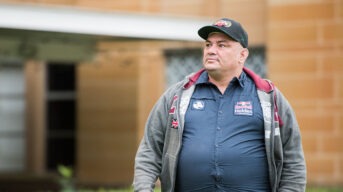
Robert: My name is Robert Kurt Strike. When I was in the institution, we were told by the… by the staff to do stuff. They don’t ask us, they told us, we have to do this, we have to do that.
Some people are very rude to us, and we can be rude back, but that’s not nice. It’s important for us to show people we can all get along together.
Jim: Look, Robert Strike is an absolute role model of how a person with intellectual disability who’s had a hard life in an institution as a child can live an extremely successful life in the community
and become an absolute leader in an organisation like CID.
Robertt: I spoke at the UN oh behalf of people with intellectual disability.
I think it’s nice to be listened to. Sometimes people don’t want to listen to us. I think, hey, we are people. You are people. We work together. That’s what I believe. I think it’s good to have a go.
Jim: So Robert was on the board for over 40 years, was chair of the board, in particular through a period where Robert led bringing in a requirement that at least half the board members were people with intellectual disability.
He also really encapsulates, there’s no us and them, it’s people with intellectual disability, families, professionals working together, that makes for a really strong partnership.
Robert: We can change people’s mind in the way of talking to them, not at them. And sometimes they think we are stupid. All I say, we are not stupid. We try to make communication better.
That’s important to me, to ensure that we all work together, even people with natural disability, people without disability. We can come together as one.
Fiona: My name is Fiona McKenzie AM. I am currently Chairperson of Council for Intellectual Disability.
My journey started with Council for Intellectual Disability in the year 2007. I’m grinning from ear to ear because with CID, I’ve achieved so much.
I guess my journey really started when I became an official board member of Council for Intellectual Disability. I knew I had the opportunity to help other people who didn’t have a voice. My first year on the board, I didn’t say boo for a whole year. And once I started, I never shut up. Sorry about that, but it’s the truth.
I became vice chair. I knew I could go further. Eventually, I became chair, so I remember when I got home, I told my parents and they were absolutely thrilled. So in a way, I’m doing this for them.
Jim: One of the things that really stands out to me about people like Robert and Fiona and Michael Sullivan is that their contribution to advocacy for people with intellectual disability and as people with intellectual disability has been so great that they have been made members of the Order of Australia.
Fiona: My legacy is I just want people to know that they can do this and for me that’s really exciting to see the next generation of board members with and without a disability coming through. If you come through our subcommittees, Learn 2 Lead, which is actually where I started from, then you can just grow your skills. You can talk at conferences. You can talk to ministers at Parliament House, in your electorate.
Give it a go. Have fun. You will make friends for life.
Manon: I’m Manon Bilawczuk, and I’ve worked at CID for a year and a half. I love the way CID is so inclusive, the way we all work as a team. We definitely walk the talk. The first thing people see, whether it’s an expo, whether it’s a workshop, is our team working together, is our team listening to each other, valuing each other and respecting each other.
It’s not just for people with intellectual disability. We help health workers, businesses, government, families, supporters. The amazing things that CID does, advocacy with Parliament House and with the government. We do Easy Read documents for hospitals, for doctors and for government. And we do workshops for people with disability and without disability. It can be about health, it can be about supported decision making, employment.
The Women’s Health Guides are amazing. So the Women’s Health Project is for women 16 years and older and it helps them to understand their bodies. We reach out to people who speak different languages and we have multiple translations in different languages.
CID has been amazing in my life. It’s been really valuable. I’ve gotten to share my stories. I’ve gotten to share personal experience and I’ve gotten to help other people.
Jim: I think CID can be very proud of what it has achieved in a number of areas. As we look to the future, it’d be lovely to say, job done, we aren’t needed anymore. But most certainly that’s not the case and is unlikely to ever be the case.
Jeanette: I see CID as an organisation that’s grown from strength to strength. There’s no reason the right of a person with an intellectual disability in New South Wales, let alone Australia, should be any different to anyone else.
Jim: What do you think about… CID should be continuing to do in the future? Are there any new things it should be doing?
Robert: Well it’s important for us to think about where we’re going in the future. And I think that… encourage people to speak up.
Fiona: CID is like a big family, no matter where you are. If you’re a member out in rural, local, up in another state, if you’ve been a staff member, you’re always part of CID.
Manon: For the future of CID, I see it getting stronger and stronger. So watch out, world. Here we come.