 1800 424 065

























Justice
People with intellectual disability are more likely to be involved with the criminal justice system.
They must get fair and equal access to justice.

-
What CID thinks about justice
Read position statementToo many people with intellectual disability have contact with the criminal justice system, especially those from First Nations backgrounds.
People with intellectual disability are not treated fairly because justice staff do not understand what they need.
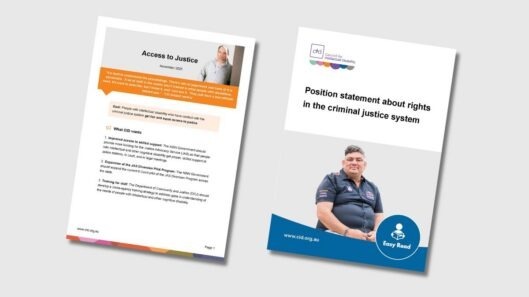
Our position statement on access to justice is available in Easy Read.
What we are doing
CID is working to improve justice for people with intellectual disability.
Advocacy
CID advocates for
- Improved access to skilled support through programs like the Justice Advocacy Service (JAS)
- Expansion of the JAS program across NSW
- Training for staff at the Department of Communities and Justice (DCJ).
Justice Advocacy Service JAS
CID supports the JAS Diversion Pilot Program through the Intellectual Disability Rights Service (IRDS).
JAS provides support for people with intellectual disability who are involved with the criminal justice system. They also provide access to diversion programs, keeping people out of prison.
We advocate for this program to get more funding to expand to all local courts in NSW.
Our stories about justice




We can work with your organisation to
- Translate complicated legal documents into Easy Read
- Make communications easier to understand for everyone
- Get practical guidance about working with people with intellectual disability.