
 1800 424 065




















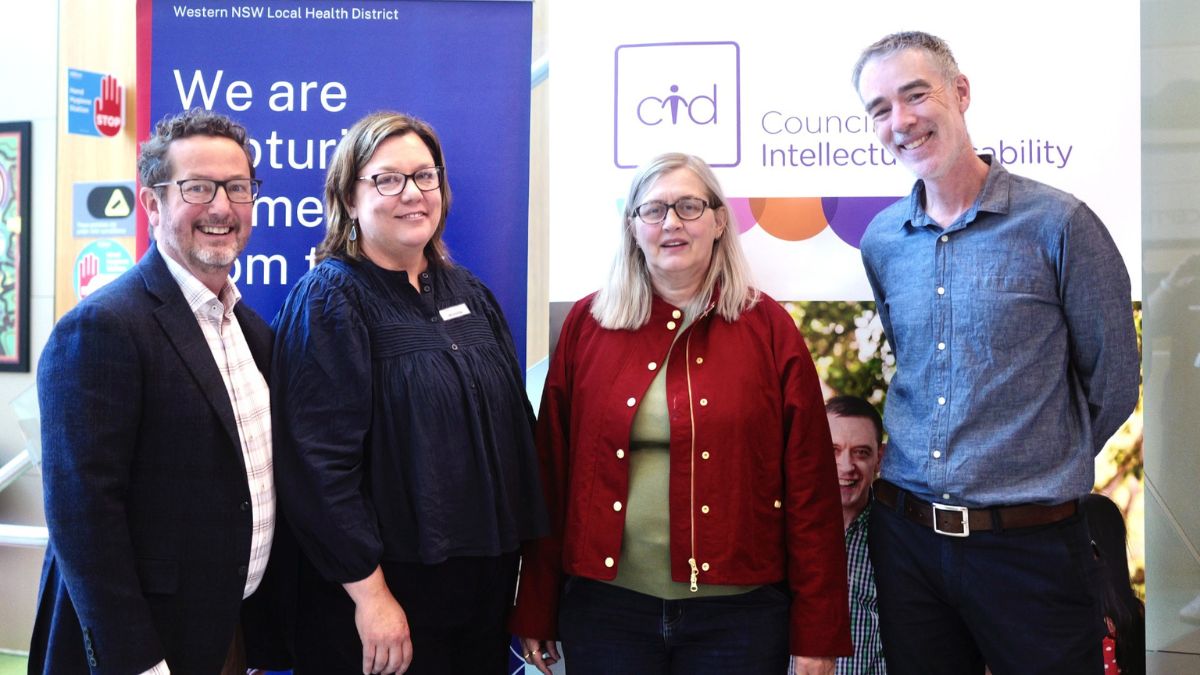
Partnership between CID and Western NSW Local Health District
On 21 to 22 April CID and health care professionals from the Western NSW Local Health District (WNSW LHD) met in Bathurst with people with intellectual disability, their families and support workers.
CID and the National Centre of Excellence in Intellectual Disability Health have been working with WNSW LHD to promote intellectual disability health. This follows the death in 2016 of Finlay Browne, a young man with Down syndrome, who sought care at Bathurst Hospital.
The meetings in Bathurst followed a community conference in Dubbo in November 2025. People with intellectual disability, families and supporters came to talk about their experiences in accessing health services. This was to help the local health district develop a strategy to improve care for people with disability.
At the meetings, people with lived experience told many stories about their experiences in the health system. They talked about the problems they have encountered. These problems mean that people often avoid visiting the hospital, and their health conditions sometimes get worse as a result.
We learned that many problems happen as people move from one stage of life to another and as they move from one health service to another. Moving from well supported paediatric care to adult health services can be especially difficult.
Participants said that the connection between NDIS support and hospital was very difficult and stressful. Other problems happen during admission to and discharge from hospital, accessing mental health services and leaving prison.
Everyone also talked about good health care. One person said, “See us as a person not a problem.” Good health care happens when health professionals:
- are not in a rush — they are patient
- communicate basic information clearly. As one participant said, “Communicate at our level, not your level!”
- explain what they are doing and what we have to do to look after ourselves
- repeat information so that we can understand
- are able to say ‘I don’t know’ — one person said, “This will get our respect”
- listen actively to what we and our family and supports say
- treat us as individuals
- have long term relationships with us
- check in on us when we are in hospital
- treat the person not the disability.
WNSW LHD and CID have been working hard to improve health care for people with intellectual disability. Alongside the event the Western NSW Specialised Intellectual Disability Health Team delivered training to clinicians at Bathurst Hospital on good communication, confronting unconscious bias and more.
It was encouraging to meet in Bathurst with many health professionals who are enthusiastic about the changes being made. They wanted more information and tools for working with people with intellectual disability.
People with intellectual disability, like everyone, have the right to the highest attainable state of health. Making lasting changes for them needs lots of people to work together. This is happening in Western NSW. Continuing effort is needed. We need to stop bias in health care so that people with intellectual disability get the care they deserve.