 1800 424 065





















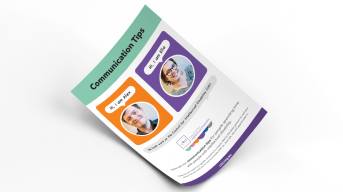
Inclusive Communication Tips Video
When you communicate in an accessible way it helps people with intellectual disability to feel involved, comfortable and heard. Without it people can feel overwhelmed, embarrassed and excluded.
Accessible communication isn’t hard.
We’ve got some simple advice you can use in your everyday life to make sure everyone is included!
Transcript
When people communicate in an accessible way, it helps us feel involved, comfortable, and heard. It means we can understand what is happening. Without it, people with intellectual disability can feel overwhelmed, embarrassed, and excluded.
Accessible communication isn’t hard. We’ve got some simple advice you can use in your everyday life to make sure everyone is included.
Start a conversation with a question so we can get to know each other. Being friendly makes me feel comfortable, safe, and equal.
I might have a family member or support worker with me. Make sure you talk to me directly and not my supporter. I will let you know if I want them to join the conversation. And if I’m on my own and you are not sure, you can always ask if I need a supporter.
When you use big words and complex terms, it is hard to understand. If there is a different easier word, then use that. Explain any complicated words you have to use.
Finish one topic before you start another. This helps me keep track of the conversation.
Try to ask me open questions. This will help you learn more about me and show me that you are interested in what I have to say.
It is important to be patient. Wait and listen. It’s okay to sit in silence while I think. This will give me the time to process what you’ve said and then think of my response.
If I’m taking a little time to get my words out, don’t jump in on my sentences. I can get there on my own.
During the conversation, check in to see if we’re on the same page. This gives us both the chance to ask each other more questions. If there are things I haven’t understood, I might need you to repeat them or say them differently.
Everyone is unique and we are the experts in how we like to communicate. Just ask us.
For more information call 1800 424 065 or email info@cid.org.au.